Product Description
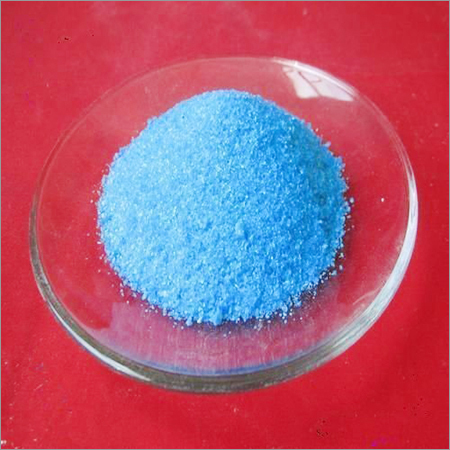
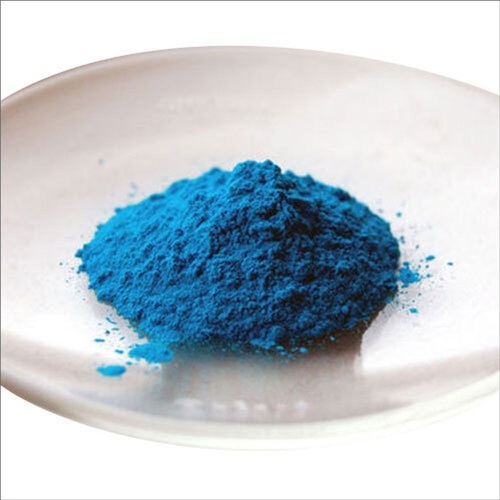
Blue Vitriol Copper Sulphate is a chemical for which we are considered an eminent manufacturer in the market. It occurs in nature as chalcanthite (pentahydrate), and two more rare ones: bonattite (trihydrate) and boothite (heptahydrate). Our experts conduct a wide range of quality inspections in order to ensure high quality, durability, effectiveness, purity, safe usage and a long shelf life. This has gained us huge appreciation from our clients in national and international markets. We offer Blue Vitriol Copper Sulphate at highly affordable prices.
Specifications of Copper Sulphate:
- CAS No. 7758-98-7
- Class : Chemical : Inorganic : Sulphate
Uses of Copper Sulphate :
- Controlling the growth of algae in waterways, reservoirs, and swimming pools;
- Controlling molds and funguses (as a component of "Bordeaux mixture");
- Providing dietary copper in animal feeds;
- Copper plating and electroforming
- Dying and calico printing, as a mordant
- Making Daniell cells, a type of battery popular in the 19th century;
- Synthesis of other compounds of copper;
- Crystallization of certain enzymes;
- Fertilizers, as a source of copper;
- Blue-green flame and firework colors
Product Details
|
Soluble In
|
Water
|
|
Physical Form
|
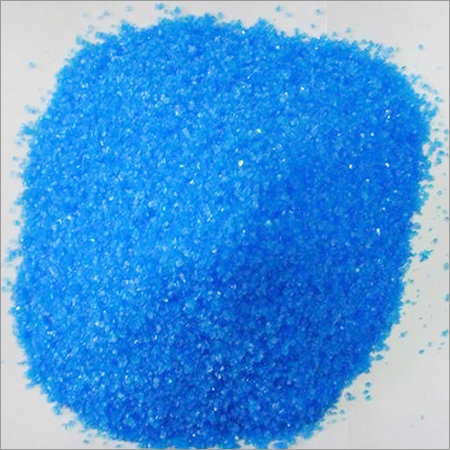
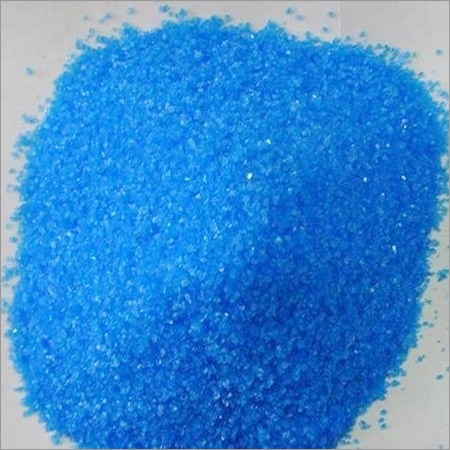
Crystal Powder
|
|
Color
|
Blue
|
|
Density
|
3.60 g/cm3
|
|
Melting Point
|
110 Degree C
|
|
Molar Mass
|
159.609 g/mol
|
|
Grade Standard
|
Chemical Grade
|
|
Formula
|
CuSO4
|
Versatile Chemical ApplicationsBlue Vitriol Copper Sulphate is prized for its diversity of uses. In agriculture, it controls fungal diseases and supplies copper as a vital micronutrient in fertilizers and feed additives. Industrially, it serves as an electrolyte in electroplating, aids in dye production, and functions as a chemical reagent. Its solubility in water and ability to act as a biocide broaden its utility across various sectors.
Safe Handling and StorageTo maximize the shelf life and maintain the stability of Blue Vitriol, keep it stored in sealed HDPE bags within a cool, dry space, away from direct sunlight. This chemical is stable under such conditions but must be kept away from strong acids and alkalis. Protective equipment is recommended when handling to prevent skin and eye irritation.
FAQs of Blue Vitriol Copper Sulphate:
Q: How should Blue Vitriol Copper Sulphate be handled for safe use?
A: This product should be handled with gloves and protective eyewear to prevent skin and eye irritation. In case of contact, rinse the affected area with water. If ingested, seek immediate medical attention. Avoid inhalation or direct ingestion as it is poisonous.
Q: What are the recommended applications for Blue Vitriol Copper Sulphate?
A: Blue Vitriol is used primarily as a fungicide in agriculture, as a micronutrient supplement in feed, and in industrial processes like electroplating and dyeing. It is also utilized in chemical synthesis and water treatment.
Q: Where should Blue Vitriol be stored to ensure maximum shelf life and stability?
A: Store the chemical in a cool, dry place, protected from direct sunlight, and securely closed within its HDPE packaging. The recommended storage temperature ranges from 5C to 40C for optimal stability.
Q: What is the process for diluting Blue Vitriol for agricultural use?
A: Dilution should be carried out by dissolving the required quantity of Blue Vitriol in water, following the specific guidelines provided for the crop or application. Always use clean water and mix thoroughly before applying to ensure even distribution.
Q: When is it beneficial to use Blue Vitriol in agriculture?
A: It is beneficial during times of increased risk of fungal diseases or when crops require supplemental copper. Its judicious use promotes healthier plants by preventing disease and correcting nutrient deficiencies.
Q: What precautions should be taken regarding the ecological impact of Blue Vitriol?
A: Blue Vitriol is toxic to aquatic life. Prevent spills and runoff into water bodies, and follow local disposal guidelines for unused product or packaging to minimize environmental risks.
 Mon-Sat 10.00 AM - 6.00 PM
 Call Us:-08045812869




 Send Inquiry




 Send Inquiry
 Send Inquiry
 Send SMS
 Call Me Free


